
CRIMINAL CARTEL OFFENCE – By Sachin Mishra

CRIMINAL CARTEL OFFENCE By Sachin Mishra Introduction The pressing need to introduce a criminal cartel offence arose because cartel activities and anti-competitive agreements were proving extremely harmful to the economy of the United Kingdom. Healthy competition is essential for economic growth, and any attempt to suppress it can negatively affect the overall economic structure of a country. Cartels manipulate markets for their own benefit by controlling prices, supply, production, or distribution of goods and services. To address these growing concerns, the UK introduced strict legal provisions under the Enterprise Act, 2002. Meaning and Definition of Cartel A cartel is generally understood as an association or agreement between producers, suppliers, distributors, or traders who collectively attempt to control market conditions. Under Section 188 of the Enterprise Act, 2002, a person commits a cartel offence if he dishonestly agrees with others to engage in prohibited anti-competitive arrangements. These prohibited activities include: – Price fixing – Limiting production or supply – Market sharing – Bid rigging The primary objective of such cartels is to eliminate or suppress competition for financial gain. Legality of Cartel Agreements Not every agreement between businesses is unlawful. Agreements become illegal only when they are formed with dishonest intentions to restrict competition and manipulate the market unfairly. In Mogul Steamship Company v. McGregor Gow and Co., the Court observed that businesses are free to combine for their own interests provided the purpose is not to injure others or destroy competition. Initially, cartel agreements in England were not considered void but were treated merely as criminal conspiracies when dishonesty was involved. Evolution of Cartel Laws in the United Kingdom Early Legal Position Earlier, English law did not strongly prohibit cartel agreements. Businesses were often free to operate according to such agreements even if they were technically unenforceable. This principle was discussed in:– Attorney-General of the Commonwealth of Australia v. Adelaide Steamship Co. Ltd.Over time, however, the harmful effects of cartel practices became more visible. Shift Towards Strict Regulation The legal approach gradually changed, and cartel activities started being viewed as improper and unlawful. This position was reinforced in:– Scott v. Brown, Doering, McNab and Co.The government realized that anti-competitive conduct was seriously damaging economic growth and consumer welfare. Approved and Exempted Cartels Certain agreements are exempted from strict cartel regulations by the UK Government. Joint Venture Agreements Joint ventures formed for developing new products or services may receive exemptions when:– Both parties are necessary for production – The arrangement promotes innovation – Market share restrictions are observedSuch collaborations are allowed because they may benefit the economy and consumers. Anti-Competitive Practices of Cartels Cartels commonly engage in practices that restrict market competition, including: Price Fixing Businesses collectively decide prices instead of allowing market competition. Bid Rigging Competitors manipulate bidding processes to predetermine winners. Market Sharing Markets or customers are divided among cartel members. Limiting Production or Supply Production is deliberately reduced to increase prices. Resale Price Maintenance Businesses fix minimum resale prices for products. These activities ultimately harm consumers by increasing prices and reducing choices. Weaknesses of the Competition Act, 1998 Before the Enterprise Act, 2002, the Competition Act, 1998 mainly imposed civil liability on enterprises. However, the Act suffered from major limitations:– Only enterprises were punished – Individuals behind cartel activities escaped liability – Cartels frequently resumed operations after penalties – Fines alone failed to deter illegal conductAs a result, cartels continued operating despite regulatory action. Introduction of the Enterprise Act, 2002 The UK Parliament enacted the Enterprise Act, 2002 to strengthen competition law enforcement.The idea was first proposed in the:“DTI White Paper: A World Class Competition Regime”The paper highlighted serious cartel activities, including a pharmaceutical cartel involved in price fixing and market sharing.The cartel remained undetected for nearly a decade and generated enormous illegal profits. Criminal Liability Under the Enterprise Act, 2002 Focus on Individual Liability The Enterprise Act shifted focus from enterprises to individuals responsible for cartel activities.The law recognized that corporations function through individuals who make decisions and carry out unlawful acts. Corporate Veil and Accountability The principle established in:– Salomon v. Salomon & Co.states that a company has a separate legal identity from its members.However, the Enterprise Act ensured that individuals hiding behind the corporate structure could also be held personally accountable. Punishments Under the Enterprise Act Individuals found guilty of cartel offences may face:– Heavy fines – Imprisonment – Director disqualification ordersThese punishments created a stronger deterrent effect compared to earlier civil penalties. Activities Covered Under Cartel Offence The Enterprise Act specifically targets:1. Price-fixing agreements 2. Agreements limiting supply or production 3. Market-sharing agreements 4. Bid-rigging agreements Essential Elements of Cartel Offence To establish criminal liability, two important elements must be proved. Dishonesty The accused must have acted dishonestly with the intention to harm competition, consumers, or the economy.Mere negligence is insufficient.The concept of dishonesty was explained in:– R v. Gosh Reciprocity in Horizontal Agreements The offence applies only where agreements exist between parties operating at the same level in the supply chain.These are called: Horizontal agreementsVertical agreements between manufacturers and distributors generally do not fall within the scope of cartel offences. Implementation of Cartel Agreement Not Necessary Under the Enterprise Act, actual implementation of the agreement is not required.Even entering into a dishonest cartel agreement is sufficient to attract liability. Whistleblower and Leniency Policy The law provides protection to whistleblowers who assist authorities in exposing cartel activities.Role of the OFTThe Office of Fair Trading (OFT) may issue:– “No-action” lettersThese letters protect cooperating individuals from prosecution under certain conditions. Conditions for Leniency Protection is usually granted where the person:– Did not initiate the cartel– Did not force others to participate– Cooperates with investigatorsThis policy encourages insiders to expose unlawful conduct. Punishments Under the Competition Act, 1998 Earlier punishments included: Heavy Financial Penalties Enterprises could be fined up to:– 10% of annual worldwide turnover Naming and Shaming Policy Authorities publicly disclosed the identities of offending enterprises to damage their reputation. Civil Damages Affected parties could sue for compensation for losses suffered.However, these measures alone proved
ELECTRONIC AGENTS ARE HELPFUL AND WITHOUT RISK FOR BUSINESS AS WELL AS CONSUMERS – BY SACHIN MISHRA
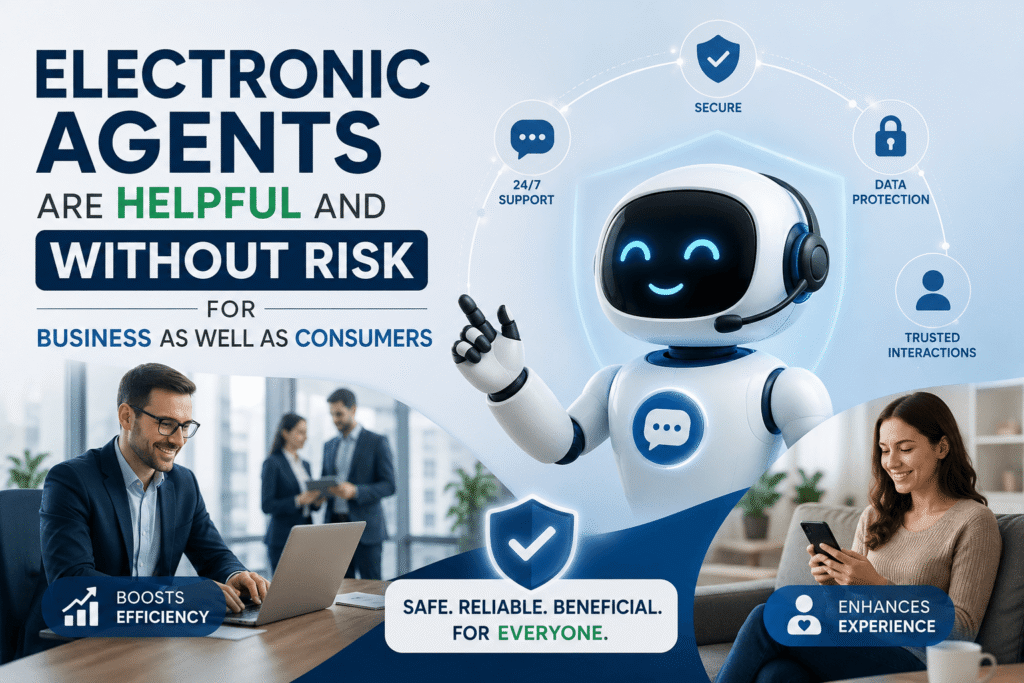
ELECTRONIC AGENTS ARE HELPFUL AND WITHOUT RISK FOR BUSINESS AS WELL AS CONSUMERS By Sachin Mishra Introduction Information Technology (IT) has transformed every aspect of modern life. From withdrawing money through ATMs to purchasing tickets online and making digital payments through credit cards, technology has become inseparable from daily activities. Not only individuals, but businesses and organizations also heavily rely on automated systems for operational efficiency. Electronic Fund Transfer (EFT) systems, online commerce, and automated stock management have significantly improved business operations. E-commerce has reduced delays, minimized human errors, and increased efficiency through automation and real-time transactions. Former U.S. President Bill Clinton emphasized that technological revolutions such as computers and the internet have fundamentally reshaped communication, trade, and society itself. Among the major developments in Information Technology, electronic agent technology has emerged as one of the most influential innovations. Electronic agents are capable of autonomously performing tasks within a networked environment. They can react, adapt, learn, and even make independent decisions in certain situations. However, despite their efficiency and usefulness, electronic agents raise important legal and security concerns. Questions arise regarding their reliability, legal status, and accountability. This article examines the concept of electronic agents, their working principles, associated legal risks, and the appropriate legal responses required to regulate them effectively. Structure of the Article This article first explains the meaning and definition of electronic agents by analyzing internationally accepted legal definitions. It then discusses the operational principles of electronic agents and differentiates between various forms of agent technologies. The article further explores the potential risks associated with electronic agents and the legal challenges posed by their increasing use. Although electronic agents offer immense commercial benefits such as cost reduction and operational efficiency, they also create concerns regarding privacy, security, and legal liability. Finally, the article evaluates different legal theories concerning the legal status of electronic agents and suggests a balanced legal framework that promotes technological advancement while minimizing associated risks. Electronic Agents and Their Working Principles What is an Electronic Agent? Electronic agents are not unfamiliar to modern society. In fact, individuals interact with them daily, often without realizing it. Search engines such as Google, online shopping assistants, automated customer support systems, and digital payment processors are all examples of electronic agents. Electronic agents are commonly referred to by different names, including: – Software Agents – Intelligent Agents – Automated Agents Despite the varied terminology, there is no universally accepted definition of an electronic agent. Definitions Under International Laws Several legal instruments have attempted to define electronic agents. Definition Under UETA (USA) The U.S. Uniform Electronic Transactions Act (UETA) defines an electronic agent as: “A computer program or an electronic or other automated means used independently to initiate an action or respond to electronic records or performances without review or action by an individual.” Definition Under UCITA (USA) The Uniform Computer Information Transactions Act (UCITA) similarly describes electronic agents as automated systems acting independently on behalf of a person without human intervention at the time of the transaction. Definition Under UECA (Canada) The Uniform Electronic Commerce Act (UECA) in Canada also defines electronic agents as electronic means capable of responding to electronic actions without human review. Essential Characteristics of Electronic Agents Electronic agents possess several important features: – Automation and autonomy – Ability to perform tasks independently – Capability to communicate with other systems – Adaptability to changing environments – Limited or complete absence of human supervision Modern technological developments have enabled electronic agents to negotiate contracts, gather information, and even perform contractual obligations autonomously. How Electronic Agents Work Electronic agents generally operate through two primary models: 1. Stationary Agents Stationary agents operate within a fixed environment and do not migrate between systems. An electronic calculator is a simple example of a stationary agent. These agents remain under the control of the user and are relatively secure and stable. Advantages of Stationary Agents – Greater stability – Easier management and supervision – Reduced exposure to external threats – Better user control 2. Mobile Agents Mobile agents are more advanced forms of electronic agents capable of moving across different computer networks independently. These agents collect data, execute tasks remotely, and return results to the user. Features of Mobile Agents – Autonomous migration across networks – Ability to gather information independently – Capability to communicate with external systems – Reduced network traffic through decentralized processing Challenges of Mobile Agents Although mobile agents are highly efficient, they are also difficult to regulate and supervise. Once released into a network, users may lose control over their actions. In some cases, mobile agents may even clone themselves or operate anonymously, increasing legal and security concerns. Components of Agent Technology Electronic agent systems depend upon two essential components: Electronic Agents Electronic agents are autonomous software programs capable of: – Negotiating transactions – Collecting and processing data – Interacting with digital environments – Performing assigned tasks independently Agent Platforms Agent platforms are the technological infrastructures that support electronic agents. These platforms manage: – Resource allocation – Communication services – Security protocols – Agent migration and execution Agent platforms also provide protection against malicious software and unauthorized access. Potential Risks and Challenges to Legal Rules Risks Associated with Electronic Agents While electronic agents provide substantial commercial advantages, they also create several risks. Modification of Agent Data and Instructions Electronic agents may be corrupted during storage or transmission. Unauthorized modifications to their code or instructions may alter their behavior and produce harmful outcomes. Theft of Confidential Information Electronic agents often process sensitive information such as: – Credit card details – Bank account information – Confidential business data – Strategic operational instructions Cybercriminals may exploit vulnerabilities to steal such information. Disappearance or Failure of Agents Electronic agents may malfunction, disappear, or fail to complete assigned tasks, resulting in financial losses and operational disruption. Risks in Mobile Agents Mobile agents are particularly vulnerable because they operate outside the owner’s direct control and interact with unknown systems and environments. Risks Associated with Agent Platforms Security Vulnerabilities Malicious agents or viruses
SINGLE COLOUR MARK- ITS REGISTRABILITY IN THE UNITED STATES AND UNITED KINGDOM

SINGLE COLOUR MARK – ITS REGISTRABILITY IN THE UNITED STATES AND UNITED KINGDOM By Sachin Mishra Introduction Trademark law has evolved significantly from protecting only traditional marks such as names, logos, labels, and symbols to recognizing unconventional and sensory marks. In the modern commercial world, businesses increasingly rely upon innovative branding strategies to distinguish their goods and services from competitors. One such emerging category is that of non-traditional trademarks, which include colour marks, sound marks, smell marks, shape marks, holograms, and motion marks. A non-traditional trademark refers to any trademark that does not belong to the conventional category of trademarks but is nevertheless capable of identifying the commercial source of goods or services. These marks may be visual, non-visual, static, or dynamic in nature. With the expansion of intellectual property jurisprudence and international trade practices, many countries have gradually recognized these unconventional marks. Among the various non-traditional trademarks, single colour marks have gained immense importance in modern branding and marketing. Businesses increasingly use colours to create a distinctive identity and consumer association. Colours possess strong psychological, cultural, and commercial value, making them an effective branding tool. However, granting exclusive rights over a single colour raises several legal concerns, particularly relating to monopolization and public interest. This article examines the concept of single colour trademarks and analyses their registrability in the United States and the United Kingdom, along with important judicial decisions and international legal developments. Concept of Non-Traditional Trademarks Meaning of Non-Traditional TrademarksNon-traditional trademarks are marks that fall outside the conventional categories of words, logos, labels, numerals, or symbols. Unlike traditional trademarks, these marks may appeal to senses such as sound, smell, taste, touch, or motion while still performing the essential trademark function of identifying the source of goods or services. These trademarks are exceptional because many of them are:– Non-visual in nature,– Dynamic instead of static,– Sensory and experiential,– Difficult to represent graphically. The growing recognition of such marks reflects the expanding scope of trademark law across the world. Types of Non-Traditional Trademarks The following are important categories of non-traditional trademarks: Colour MarksMarks consisting of a single colour or combination of colours. Sound MarksDistinctive sounds associated with a brand or service. Smell or Olfactory MarksUnique scents capable of identifying commercial origin. Shape MarksDistinctive product shapes or packaging designs.Motion or Moving Image MarksAnimated marks or moving visual representations. Hologram MarksThree-dimensional holographic representations.Gesture MarksSpecific gestures used for commercial identification. Taste MarksDistinctive flavours functioning as source identifiers. Tactile MarksMarks identified through touch or texture. Trade DressOverall visual appearance and presentation of a product. International Recognition of Non-Traditional Trademarks International intellectual property law has gradually acknowledged non-traditional trademarks through various treaties and agreements. Recognition under International Agreements TRIPS AgreementThe Agreement on Trade-Related Aspects of Intellectual Property Rights recognizes signs capable of distinguishing goods or services, including combinations of colours. NAFTAThe North American Free Trade Agreement broadened the scope of trademark protection among member nations. EU Harmonization DirectiveEuropean trademark laws have increasingly recognized unconventional marks through harmonized directives. Colour Trademarks and Their Commercial Importance Meaning of Colour TrademarksA colour trademark refers to the use of a particular colour or combination of colours to identify and distinguish goods or services of one undertaking from those of another. A colour may become a trademark when consumers associate that colour exclusively with a particular brand or product. Importance of Colours in Branding Colours play a crucial role in::– Product packaging,– Advertising,– Consumer recall,– Brand identity,– Emotional and psychological association.Businesses carefully select colours to attract customers and establish market recognition. Psychological and Cultural Significance of Colours Colours often carry psychological and cultural meanings. For example:– Red symbolizes luck and happiness in China,– Black may symbolize mourning or evil in Western countries,– Purple is strongly associated with Cadbury chocolates. These associations enhance the commercial value of colour trademarks. Colour Marks and Consumer Identification Colour marks are especially useful where:– Consumers are illiterate,– Language barriers exist,– Traditional word marks are difficult to recognize. A consumer may identify a product merely through its distinctive colour even without reading the brand name. Single Colour Marks Meaning of Single Colour MarksA single colour mark refers to one specific colour claimed independently as a trademark without any accompanying word, symbol, or design. Over time, single colour marks have evolved into a recognized category of non-traditional trademarks. Growing Popularity of Single Colour Marks The increasing competition in modern markets has encouraged businesses to adopt innovative branding methods. Colours attract consumers more effectively and help create a memorable identity. As a result:– Applications for colour trademarks have increased significantly,– Companies use colours strategically for brand recognition,– Colours are increasingly treated as valuable intellectual property assets. Distinctiveness of Single Colour Marks Requirement of DistinctivenessA trademark must possess distinctiveness to qualify for registration. In the case of single colour marks, distinctiveness becomes the most crucial requirement. Distinctiveness may be:– Inherent Distinctiveness, or– Acquired Distinctiveness through Use. Lack of Inherent Distinctiveness Courts generally hold that a single colour is not inherently distinctive because:– Colours are commonly used in trade,– Consumers do not ordinarily perceive colour alone as a source identifier,– Granting exclusivity may restrict competition.Therefore, single colour marks usually require proof of acquired distinctiveness. Acquired Distinctiveness and Secondary Meaning A colour acquires distinctiveness when consumers associate it specifically with one commercial source due to long and extensive use. This is known as secondary meaning. Factors considered while determining secondary meaning include:– Advertising and promotional activities,– Consumer surveys,– Sales figures,– Media recognition,– Extent of use,– Consumer association with the colour. Registrability of Single Colour Marks in the United States Trademark Protection under the Lanham ActThe Lanham Act governs trademark law in the United States. Section 45 of the Lanham ActSection 45 defines a trademark broadly to include:– Any word,– Name,– Symbol,– Device,– Combination thereof.The definition does not expressly exclude colour marks. Section 2 of the Lanham ActSection 2 provides that no trademark shall be refused registration merely because of its nature unless it falls within specified exceptions. Since colour is not expressly prohibited, courts gradually interpreted the Act to